KSM-66 Ashwagandha: What Clinical Trials Actually Show
Reviewed by Shrey Choudhary, Pharmacist & Founder, HealthyNeur
⚡ Quick Answer
KSM-66 is a standardised, full-spectrum root extract of Withania somnifera (ashwagandha) with the highest concentration of withanolides (≥5%) among commercially available extracts. Across peer-reviewed randomised controlled trials, it has demonstrated statistically significant reductions in perceived stress, serum cortisol, anxiety scores, and sleep onset latency — at a dose of 300–600 mg/day. It is the most clinically studied ashwagandha extract in existence.
What Is KSM-66 Ashwagandha, and Why Does the Formulation Matter?
Not all ashwagandha is the same. This is not a marketing disclaimer — it is a pharmacological fact.
Ashwagandha (Withania somnifera) has been used in Ayurvedic medicine for over 3,000 years as a rasayana, or rejuvenating herb. The active compounds responsible for its adaptogenic effects are primarily withanolides — a class of steroidal lactones concentrated in the plant's root. The problem? Most commercially available ashwagandha powders and extracts are poorly standardised, making their withanolide content variable and their clinical effects unpredictable.
KSM-66 is a patented, full-spectrum root extract manufactured by Ixoreal Biomed using a proprietary milk-processing technique rooted in classical Ayurvedic preparations. It is standardised to contain ≥5% withanolides by HPLC assay, derived exclusively from the root — not a root-and-leaf blend, which can alter the phytochemical profile and introduce undesirable alkaloids.
📌 Key Takeaway
As a pharmacist, the reason HealthyNeur chose KSM-66 over generic extracts comes down to one principle: if a clinical claim is being made, it must be backed by the exact ingredient tested in the trials. KSM-66 has over 24 published human clinical trials. Generic ashwagandha powder does not.
The Clinical Evidence: What the Studies Actually Measured
Stress and Cortisol Reduction
The most replicated finding in KSM-66 trials is its effect on the hypothalamic-pituitary-adrenal (HPA) axis — the central stress-response system that governs cortisol output.
🔬 Study Highlight
Study: Chandrasekhar et al., Indian Journal of Psychological Medicine, 2012 — PMID: 23439798
Design: Double-blind, randomised, placebo-controlled — 64 adults with chronic stress — 300 mg KSM-66 twice daily for 60 days
Findings: Perceived Stress Scale (PSS) scores reduced by 44% vs 5.5% in placebo. Serum cortisol levels fell by 27.9% in the treatment group. General Health Questionnaire scores improved significantly.
The mechanism involves the attenuation of HPA axis hyperactivity through withanolide modulation of glucocorticoid receptor sensitivity — meaning KSM-66 helps recalibrate how the body interprets and responds to stressors, rather than simply blunting cortisol output acutely.
Anxiety and Mood
🔬 Study Highlight
Study: Choudhary et al., 2017 — PMID: 28471731
Design: 52 adults with self-reported anxiety — 300 mg KSM-66 twice daily for 8 weeks
Findings: Statistically significant improvements on the Hamilton Anxiety Rating Scale (HAM-A), alongside reductions in morning cortisol and improvements in subjective wellbeing.
The anxiolytic mechanism is distinct from pharmaceutical anxiolytics like benzodiazepines. Rather than acting directly on GABA-A receptors with sedation as a side effect, KSM-66's withanolides appear to modulate GABAergic signalling more gently while simultaneously reducing inflammatory cytokine activity — particularly IL-6 and TNF-α — which are increasingly recognised as contributors to anxiety and mood dysregulation in high-stress individuals.
This is particularly relevant for working professionals, where anxiety is often not a standalone disorder but a downstream consequence of sustained cortisol dysregulation, poor sleep, and systemic low-grade inflammation.
Sleep Quality
🔬 Study Highlight
Study: Langade et al., PLOS ONE, 2019 — PMID: 31728244
Design: Double-blind RCT — 60 adults with insomnia complaints — 300 mg KSM-66 twice daily for 10 weeks
Findings: Significant improvement in sleep onset latency (time to fall asleep), sleep efficiency, and wake after sleep onset (WASO). Participants reported improved mental alertness on rising.
The proposed mechanism involves cortisol normalisation — particularly the blunting of the evening cortisol spike that delays sleep onset — alongside possible interaction with triethylene glycol, a non-withanolide compound in ashwagandha root that may have direct sleep-inducing properties.
Cognitive Function and Memory
🔬 Study Highlight
Study: Choudhary et al., 2017 — PMID: 28471731
Design: Adults with mild cognitive impairment — 300 mg KSM-66 twice daily for 8 weeks
Findings: Significant improvements in immediate and general memory, executive function, sustained attention, and information-processing speed as measured by the Wechsler Memory Scale.
The likely mechanism is dual: the reduction in cortisol-mediated hippocampal stress and a possible neuroprotective effect from withanolide A, which in preclinical studies has shown activity in promoting axon and dendrite growth in neurons.
KSM-66 Dosage: What the Evidence Supports
| Outcome | Studied Dose | Duration | Key Trial |
|---|---|---|---|
| Stress & Cortisol | 600 mg/day (300 mg × 2) | 60 days | Chandrasekhar et al., 2012 |
| Anxiety (HAM-A) | 600 mg/day | 8 weeks | Choudhary et al., 2017 |
| Sleep Quality | 600 mg/day | 10 weeks | Langade et al., 2019 |
| Cognition & Memory | 600 mg/day | 8 weeks | Choudhary et al., 2017 |
| Male Testosterone | 600 mg/day | 8 weeks | Wankhede et al., 2015 |
The consistent therapeutic window across trials is 300–600 mg/day of KSM-66, standardised to ≥5% withanolides. Doses below 250 mg have not been robustly studied for these outcomes. Doses above 600 mg/day do not appear to confer additional benefit based on current evidence.
📌 Key Takeaway
For sleep-related benefits, a split dose works best — one in the morning and one at least an hour before bed. For stress and cognitive outcomes, consistent twice-daily dosing over 6–8 weeks produces the most reliable results.
What KSM-66 Is Not: Honest Caveats from a Pharmacist
The evidence for KSM-66 is stronger than for almost any other adaptogen currently on the market. But intellectual honesty demands acknowledging what it is not.
KSM-66 is not a pharmaceutical anxiolytic. If you are managing a clinical anxiety disorder, it should be considered a complementary intervention, not a replacement for a treatment plan developed with a qualified psychiatrist. Supplementation and clinical care work best together — not in competition.
KSM-66 is not fast-acting. The majority of trials show meaningful outcomes at the 6–8 week mark. Professionals expecting noticeable change in 3–5 days will likely be disappointed. Adaptogens require the body to recalibrate over time — the mechanism is regulatory, not acute.
⚠️ Important Note
Those with thyroid conditions should exercise caution — ashwagandha has demonstrated thyroid-stimulating activity in some studies. Pregnant women should avoid it. Anyone on immunosuppressants or sedative medications should consult a physician before use due to potential pharmacodynamic interactions.
How KSM-66 Compares to Other Ashwagandha Extracts
| Extract | Standardisation | Root-Only? | Human RCTs | Withanolide % |
|---|---|---|---|---|
| KSM-66 | Full-spectrum, HPLC | Yes | 24+ | ≥5% |
| Sensoril | Glycowithanolides | Root + Leaf | 10+ | ≥10% |
| Generic Powder | Variable / none | Mixed | Minimal | 1–3% (approx.) |
| Shoden | Withanolide glycosides | Root + Leaf | Limited | ≥35% (glycosides) |
KSM-66 and Sensoril are the two most clinically validated extracts. KSM-66's root-only derivation more closely mirrors the traditional Ayurvedic preparation and has a broader evidence base for stress, anxiety, and sleep outcomes specifically.
Want to know if KSM-66 is right for you?
Take the free 2-minute HealthyNeur assessment — get a personalised recommendation based on your stress, sleep and anxiety symptoms.
Take the Assessment →A Note on Sourcing and Quality Standards
When evaluating any KSM-66 product, three quality markers matter: whether the certificate of analysis (CoA) confirms withanolide content by HPLC, whether the product is third-party tested for heavy metals (arsenic and lead contamination are common in poorly sourced Withania somnifera), and whether the manufacturer can confirm the extract is the licensed KSM-66 ingredient from Ixoreal rather than a generic claiming the name.
HealthyNeur's formulations use verified, licensed KSM-66. Every batch is third-party tested through an NABL-accredited laboratory. This is not a standard that every brand in India meets — and it is a standard that every consumer should demand.
Frequently Asked Questions
Q: How long does KSM-66 take to work?
Based on clinical trial data, most users begin experiencing measurable improvements in stress scores and sleep quality between weeks 4 and 8 of consistent daily use at 600 mg/day. Some individuals report subtle changes in perceived stress within the first two weeks, but the full adaptogenic benefit requires sustained use over at least six weeks.
Q: Is KSM-66 safe for daily long-term use?
Clinical trials have assessed KSM-66 safety over periods of up to 16 weeks with no significant adverse events reported at therapeutic doses. Standard pharmacological guidance is to consider a periodic break (8–10 weeks on, 2–4 weeks off), though this is precautionary rather than evidence-mandated. Individuals with thyroid conditions or those on prescription medications should consult a physician before use.
Q: What is the difference between KSM-66 and standard ashwagandha powder?
KSM-66 is a patented, standardised root extract with a guaranteed minimum of 5% withanolides by HPLC. Standard ashwagandha powder is neither standardised nor verified for active compound concentration, making its clinical effects unpredictable. Every clinical trial demonstrating ashwagandha's benefits on stress, cortisol, and sleep was conducted with KSM-66 — not with generic powder.
Q: Can I take KSM-66 with magnesium?
Yes. KSM-66 and magnesium (particularly magnesium glycinate or bisglycinate) act through complementary, non-overlapping mechanisms. KSM-66 modulates HPA axis activity and cortisol; magnesium supports NMDA receptor regulation, GABA activity, and melatonin synthesis. There is no known pharmacodynamic interaction between them, and this combination is well-tolerated in clinical practice.
Q: Does KSM-66 affect testosterone?
A 2015 RCT (Wankhede et al., PMID: 26609282) found that men taking KSM-66 at 600 mg/day for 8 weeks showed a statistically significant increase in testosterone levels compared to placebo. KSM-66 does not directly raise testosterone — it removes a suppressive constraint on natural testosterone production by lowering chronically elevated cortisol.
Q: Is KSM-66 effective for women?
Yes. Several trials including Chandrasekhar et al. 2012 and Langade et al. 2019 included mixed-gender cohorts and showed consistent benefit across sexes. A specific trial on female sexual function (Dongre et al., 2015; PMID: 25796090) also demonstrated improvements in arousal, lubrication, and satisfaction scores — likely mediated by stress reduction and hormonal recalibration.
⚠️ Important Note
This article is written for informational purposes only and does not constitute medical advice. If you are managing a diagnosed condition or are on prescription medication, please consult a qualified healthcare professional before beginning any supplement protocol.
Written by Shrey Choudhary, Pharmacist & Founder, HealthyNeur. All referenced studies are available on PubMed.
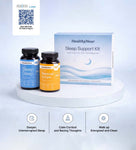
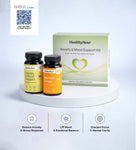
Explore the full ingredient breakdown in the Anxiety & Mood Support Kit — formulated with licensed KSM-66 at clinically studied doses.